Monday, September 28, 2026
spot_img
Home Blog Page 12

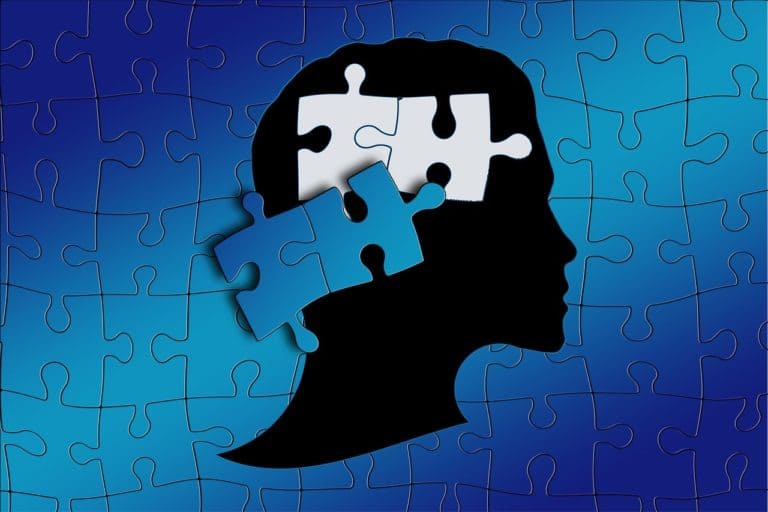
It’s time to stop the Autism stigma

During our journey into Autism Spectrum Disorder, I met countless people who either have a kid during the spectrum or learn a boy on the spectrum.   It’s mixed with hope so heartache.   I am surprised and saddened to learn of parents who have been encouraged to seek their child’s evaluation, still refuse to will so, afraid their person can be labeled or stigmatized or simply hoping children might grow out of it.   I’m forever grateful to our family doctor who was concerned about the child’s lack of speech growth at age 2.   I might definitely describe it away, born into a talker family.   He was “contemplative.”   I still prayed for him to start communicating more, realizing that all might be a problem down the road, given how often his siblings communicate!   However, after looking at the normal development of speech, talking to friends with professional experience in the education and mental health of children, I decided to why a speech evaluation.   First came the diagnosis.   That’d explain so much of his odd behavior.

All this got me curious about “stigma” definition and I looked up in the dictionary.   It seems to have “a mark of shame or discredit.”   So, I looked up “shame” and it seems to concentrate on the person’s conduct that causes one to have “the painful feeling emerging from the perception of something dishonorable, improper, ridiculous, etc., done by oneself or another: it was overwhelmed with shame.” Initially, young children don’t know how their conduct affects others.   It must concentrate on their nature’s ID component, which is growing.   Children do, however, begin to understand how important others are and have needs as they continue to develop empathy.   Now, it’s fair that an autistic child would only be motivated to control their behavior and develop social skills by having as much early intervention and therapy as possible.   In my view, any “stigma” would result in encouraging a child to proceed, untreated, and then expect the child to “form” or “develop out of it” as behaviors are further reinforced.

I heard it repeatedly said, “Early intervention is the answer,” and they’re right!   The brain grows rapidly in the first five years.   Catching autism early will do nothing but profit for all treatments out there.   Starting a child on a particular carbohydrate diet to support all work better is much simpler with a younger child.   The kid is the healthiest of all and enjoys the therapies I offer him that decides with his diet.

Psychological problems are where we as parents still feel the “stigma” of autism.   Mostly, the kid is a good kid.   However, he drops books from shelves, runs in circles, and the most difficult thing I have to contend with is his propensity to like to lie down on the floor, wherever we are.   Immediately, I saw him agree to lay down on the floor at Target, Church, and Library.   I’ll tell him, “No, you need to get up” and stand up, but, lo and behold, he’s getting bigger and I won’t be able to do that for much longer, particularly with how he’s eating!   This kind of behavior is bizarre.   My goal is to teach him as manageable.   But, I’ll need help with that.   I’m not that tall, and I’m the primary caregiver as my husband has a challenging schedule for us.   Due to his age, the kid gets away with this behavior to some degree, but it’s not acceptable social conduct and he’ll have to know when and where to lay on the floor.   (Hint: not in the church foyer while Mommy is talking to other parishioners.) So, how do I do this?   Will I think The Kid’s stigma?   To be honest, I see myself as Kid’s advocate.   I’m letting people know he’s autistic, but at the same time, I’m trying to train him how to act in public while also give him an outlet, trying to understand what he’s going through.   If my kid had another illness, I’d want him to be the best he can be.   For example, if he were confined to a wheelchair, I wouldn’t encourage him to be like any other kid and run and play on the playground, etc. Instead, I would expect him to turn around and engage in ways he could, in a meaningful way, be comfortable in who he is and who God made him be, giving praise and honor to God in everything he says and does.   That’s all my men!

Something I’ve learned about this during my parenting: is the kid considered a parent extension?   And, is this child a gift?   I believed that when people understand my child’s autism, there will be compassion and understanding.   There’s no obvious cause of autism; scientists try to find it out.  
Effects of l-Carnitine in Patients with Autism Spectrum

The 6-month study, published in the peer-reviewed Journal of Autism Spectrum Disorders, provided L-carnitine to participants ranging from 2 to 8 years of age and assessed results using CARS (childhood autism rating scale). CARS is a 15-item scale of criteria such as interaction (both verbal and nonverbal), object usage, anxiety and nervousness, and interpersonal relationships. The scale was developed to describe autism and quantitatively identify symptom severity. Researchers concluded that counseling greatly increased those scores in the participants receiving the supplement.

The researchers, affiliated with the pharmacy and medical faculties at Ain Shams University in Cairo, added that autism is a worldwide problem, with a reported prevalence ranging from 6:1000 in Saudi Arabia to 1:1000 in Israel, to 1:100 in the United States, according to data from the Centers for Disease Control. Autism patients also have an average lifespan, researchers said. Taking this into account, they said, “As regards the amount of’ patient-years,’ ASD patients reflect a patient population as large as Alzheimer’s disease, the other major neurological disorder. Given the strong unmet medical need, there is currently no accepted successful systematic treatment.”

Field experts believe a mixture of genetic, environmental and immunological factors affects autism. Recent research suggests autism patients are further vulnerable to oxidative stress associated with mitochondrial dysfunction.

Some autistic children demonstrated evidence of mitochondrial dysfunction, the researchers said, supported by altered brain energy metabolism, decreased cellular energetic and impaired mitochondrial energy reserve capacity.

Details of the Study done

The double-blind, placebo-controlled analysis recruited 30 subjects, ranging from 29 to 108 months. They were randomly allocated to either a 16-memberor14-member control group. The daily dosage was set at 100mg per kilogram of body weight per day, given in glucose syrup in equal morning and evening doses. A clinical pharmacist explained the materials to work participants and dosing instructions.

A single researcher administered the CARS test, unaware of whether subjects were members of the placebo or supplementation groups. Ain Shams University Hospital conducted blood tests and CARS evaluations at ambulatory pediatrics clinics. Free and total blood carnitine levels were measured 3 and 6 months using liquid chromatography-mass spectrometry.

Additional Studies needed.

The lab conducting these experiments further concealed the subjects ‘ medical status. The researchers concluded that there was substantial progress in the CARS scores of participants (P-groups <0.001) and (P-overtime=0.006), with statistically significant differences in free carnitine levels (P = 0.027) and total carnitine levels (P = 0.036). There was no connection between baseline free and total carnitine levels with shifts in CARS scores from nil to 6 months.

L-carnitine therapy was generally well-tolerated, they said. But, they noted, since there was no correlation between calculated blood L-carnitine levels and changes in CARS scores they could not derive blood or clinical predictors from patients who could be eligible for L-carnitine therapy. Those findings were consistent with promising outcomes in other recent L-carnitine autism treatment studies, which showed improvement in some of autism’s mental and physical symptoms nevertheless not, generally, in language use impairments.

The Egyptian researchers noted that their study did not elucidate an action mechanism for L-carnitine’s observed effects, and they also said the dosage used was derived from earlier trials and may not be optimal. Supported more research to explore these variables.

https://www.ncbi.nlm.nih.gov/pmc/articles/PMC6314880/

Bio-medical Treatment: Some interesting details

Defeat Autism Now (DAN!) is a project of the Autism Research Institute, founded in the 1960s by Dr. Bernard Rimland. DAN! doctors are trained in the “DAN! Protocol,” an approach to autism treatment which starts with the idea that autism is a biomedical disorder. Specifically, DAN! doctors feel that autism is a disorder caused by a combination of a lowered immune response, external toxins from vaccines and other sources, and problems caused by certain foods.

It’s a potential therapeutic care approach.   What’s the biomedicine?   Ok, I’ve Googled it for a quick definition

1.  The medical research branch deals with the human capacity to withstand environmental pressures and variations, as in space travel. EOLBREAK

2.  Applying natural science concepts, especially biology and physiology, to clinical medicine. EOLBREAK Because our bodies are biologically designed, it only makes sense to see how it can function properly and what does not work properly with Joshua’s, and to do what we can to restore his body so that he can function as intended.

Some additional details here

https://nutritioninstitute.com/dan-protocol-candida-and-autism/

Do Alternative Therapies Help Autistic Kids Recover?

I watched autism-related shows where traditional recovery approaches are praised for their statistical evidence that they work, and they certainly do great good.   The conversation generally goes along the lines of putting more effort into these treatments (ABA, Speech, Occupational, and Physical Therapies).   In fact, in most cases, all are the just treatment insurance covers, except in many cases for biofeedback.   There are not only conventional therapies, but there are still alternative approaches it has been shown to help.   There’s research to help what they’re doing, so more data emerges about their effectiveness.  

 In fact, a kid was part of last year’s study through iLs, for example, and his case showed improvement.   He also used Bio-Feedback for a limited time!   There really will be no problem providing both/and commitment to autism treatments.   Ideally, insurance will benefit cover these therapies ‘ costs, especially as to the uncertain causes of autism.   I mean, can we really afford disability care for 1/50 kids until they’re adults?   Wouldn’t they pay them into the system?  

We should help-seeking treatments that help children recover.   That seems to me, no brainer!

I recently launched a treatment plan that I would like to use once we have the resources: the Focus Program, provided here in Coeur d’Alene.   I attended a FOCUS briefing on my Dr. Amy Spoelstra, who gave an excellent summary of what could have led to the increase in autism rates, which I genuinely believe is on track.   She defined not only our children’s problems but also a practical approach to helping these children recover:

focus-diagram
  • Save

FOCUS uses chiropractic, nutrient and neurological integrated motions to restore and rejuvenate proper neurological function and development.

The three methods intended to make this adjustment are not used to conceal short-term effects like medications. Instead, FOCUS focuses on reducing neurological intervention in the body by chiropractic, eliminating toxic toxins in our diet that induce nutritional inflammation in the brain, and restoring proper growth through precise neurological exercises.

Through these three methods together, we can effectively tackle the root cause of neurodevelopmental disorders and see real, tangible change. I’d love to see Dr. Amy’s traditional approach to treating autism.   This takes action on our parts in the form of advocacy, not just awareness.    It takes dedication and hard work and the strength to challenge to ensure that our children are not as overly exposed to all the toxins out there, but also adequately treated, not just medicated, and work towards recovery. It’s now 1/50 kids and 1/33 boys.   We can’t wait for the forces to find out.   My cynical nature in this area tells me they’re more concerned with political contributions, influence, and profit than all these toxins do to our kids.   It’s time we, as a nation, stand up and take care of our own children’s health care decisions and their regular exposure.   For instance, we’re in charge of what we purchase and allow in our homes, at least we can all start there through diet, cleaning products, and other environmental toxins.  

I’m not sure what the vaccine plan would take or what’s put in this to change, but I know there are people out there, like the Sound Choice Pharmaceutical Institute, who could definitely use our support in their research.   They and people like Dr. Amy are moving against the tide, and we need to support them in the battle to discover what triggers this crisis and our children’s recovery. I’d love to hear your thoughts and comments on this topic, as I know there’s a lot more available, and some of the treatments are under more scrutiny than others…

My approach with kids has always been “no harm,” but at the same time, being able to see what improves his healing in the most successful way.   I wish I had infinite resources!   Many services out there provide financial assistance, but they can be hard to find.   If anyone knows any resources, list them in the comment section below.    Your feedback is always welcome!

DIY Cardboard House – Scandinavian | Craft Ideas for Kids on Box Yourself

How to recycle a milk container to make the best present box for home-made cookies for grandparents, instructors and good friends. How to recycle a cereal box to make a Christmas tree design.

Find out to make a Scandinavian home from a cardboard box!

Do it yourself cardboard home – 11 Easy Craft For Kids cardboard home for school job, do it yourself cardboard home, cardboard box crafts, cardboard crafts for kids, cardboard boxes, diy tasks, how. < iframe src="https://www.youtube.com/embed/8gv4FEePB7w" width="480" height="270" frameborder="0" allowfullscreen="allowfullscreen" >

0 Shares
Share via
Copy link
Powered by Social Snap